
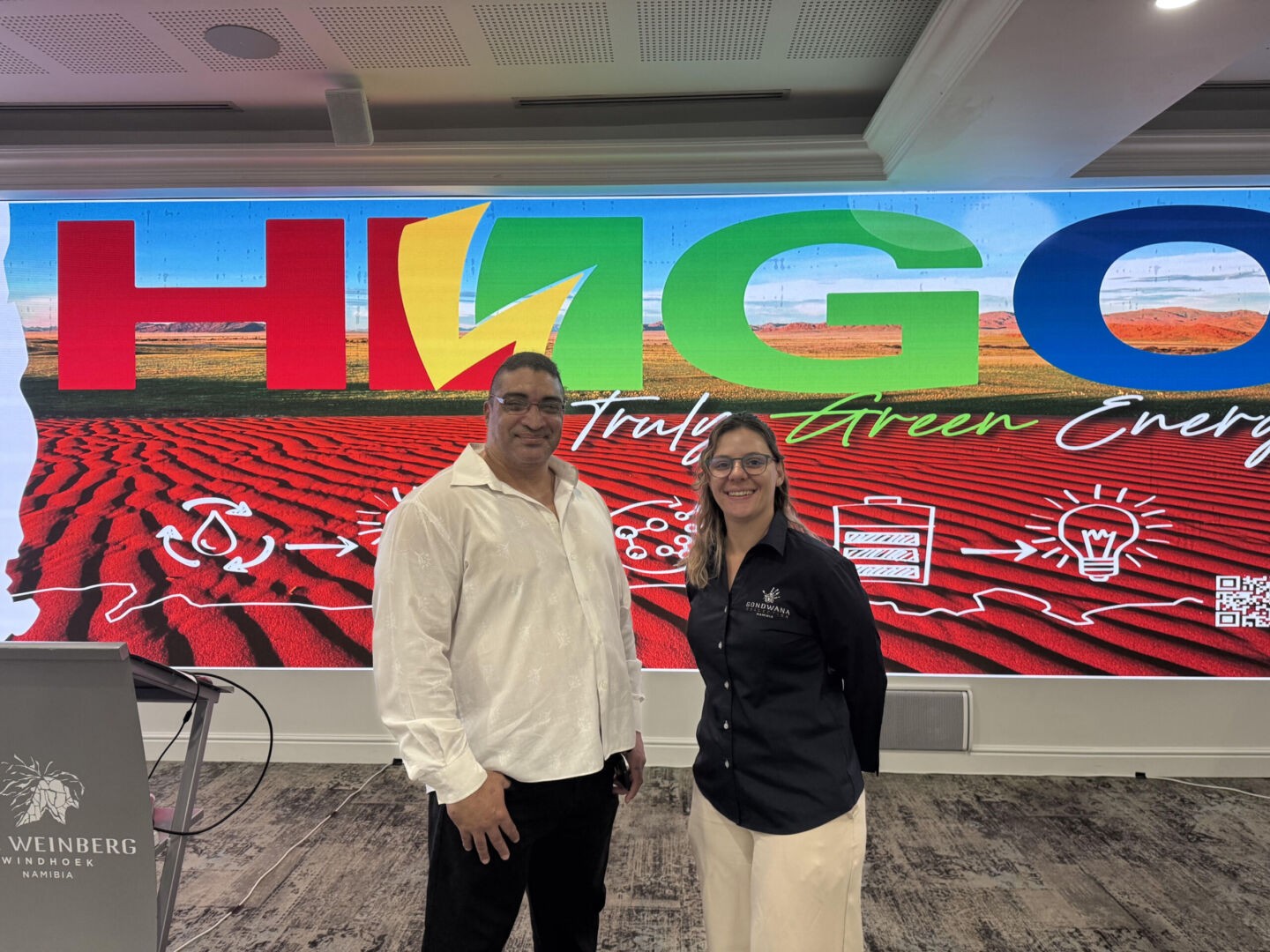
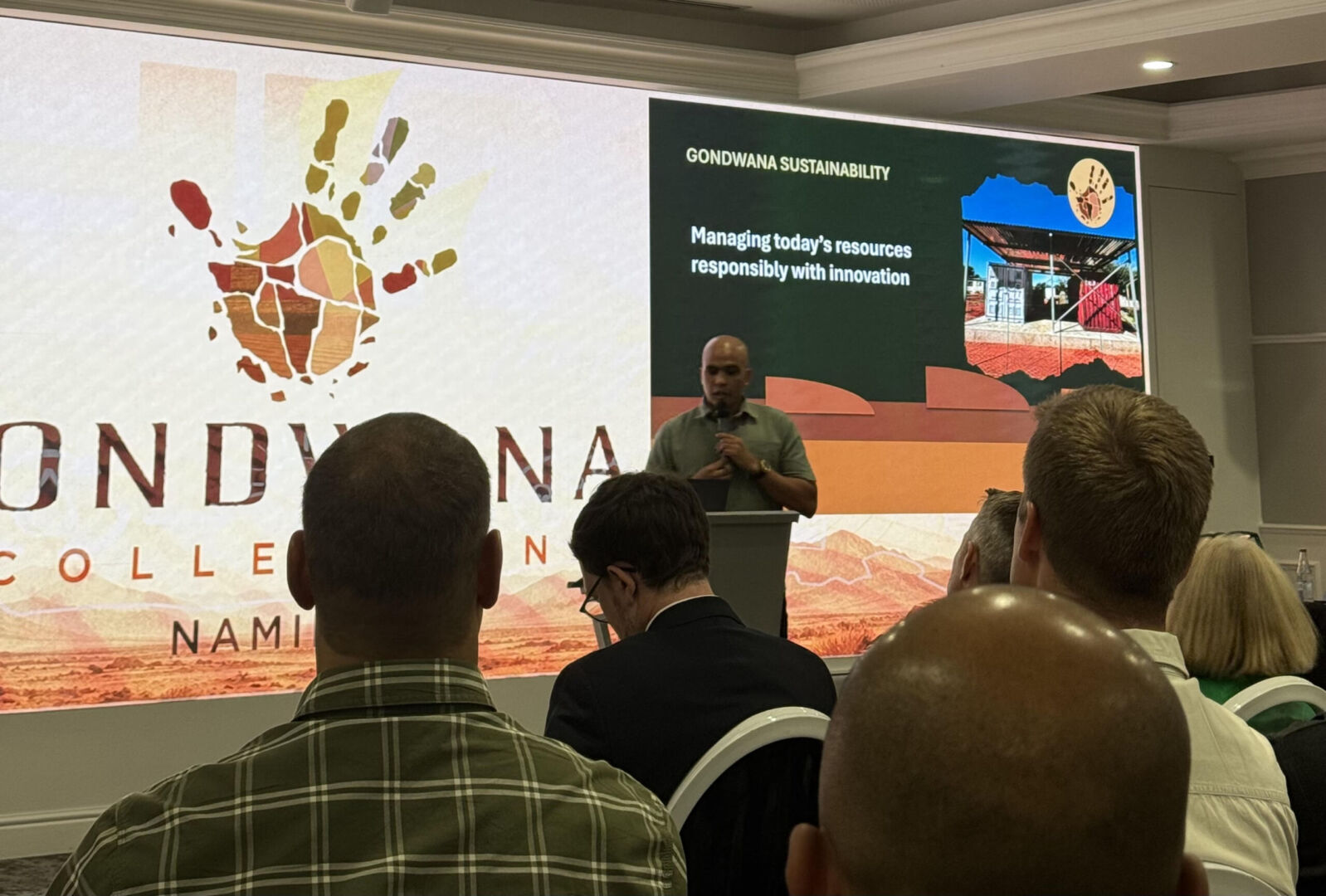
Namibia Business School lecturer and MBA: Natural Resource Management Specialization Coordinator at the Namibia Business School, Dr Marius Johannes, recently participated in a two-day HygO Workshop, facilitated by the international research consortium responsible for the HygO Project, alongside Michelle Dillman, MBA Natural Resource Management Student who also serves as an Admin and Governance Officer for Environmental and Social Impact at Gondwana Collection Namibia who was also involved in this project.
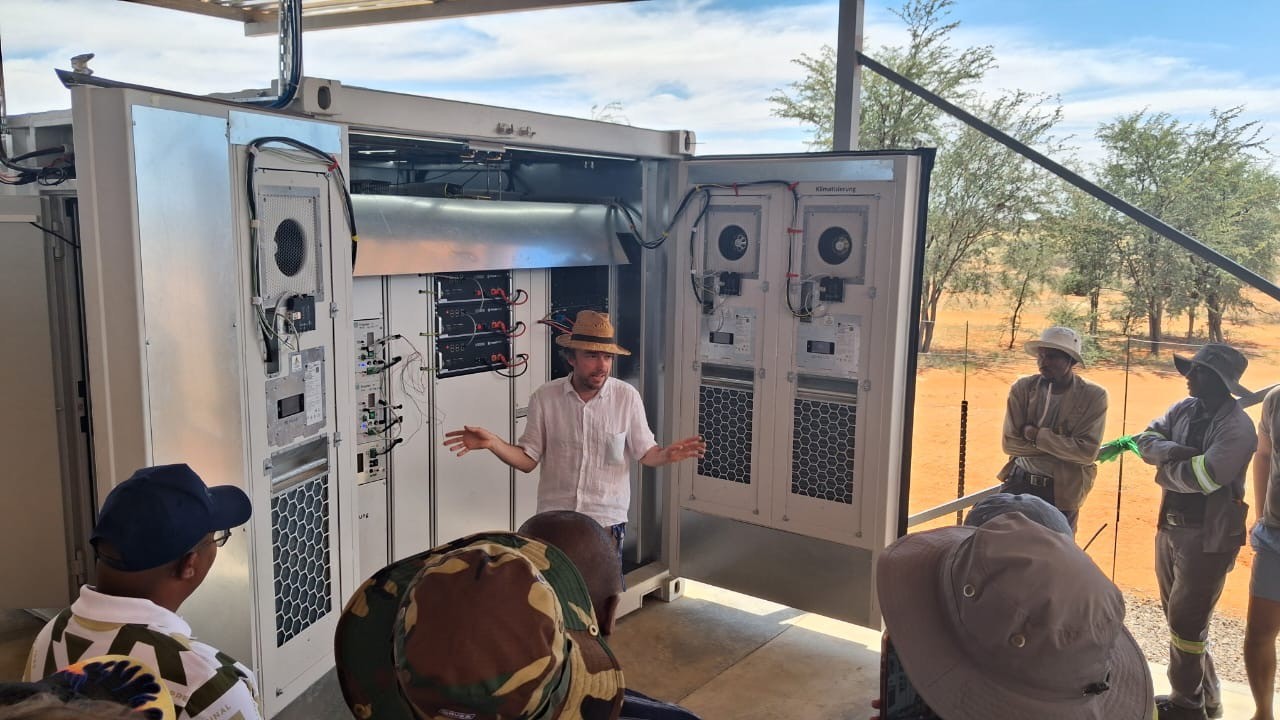
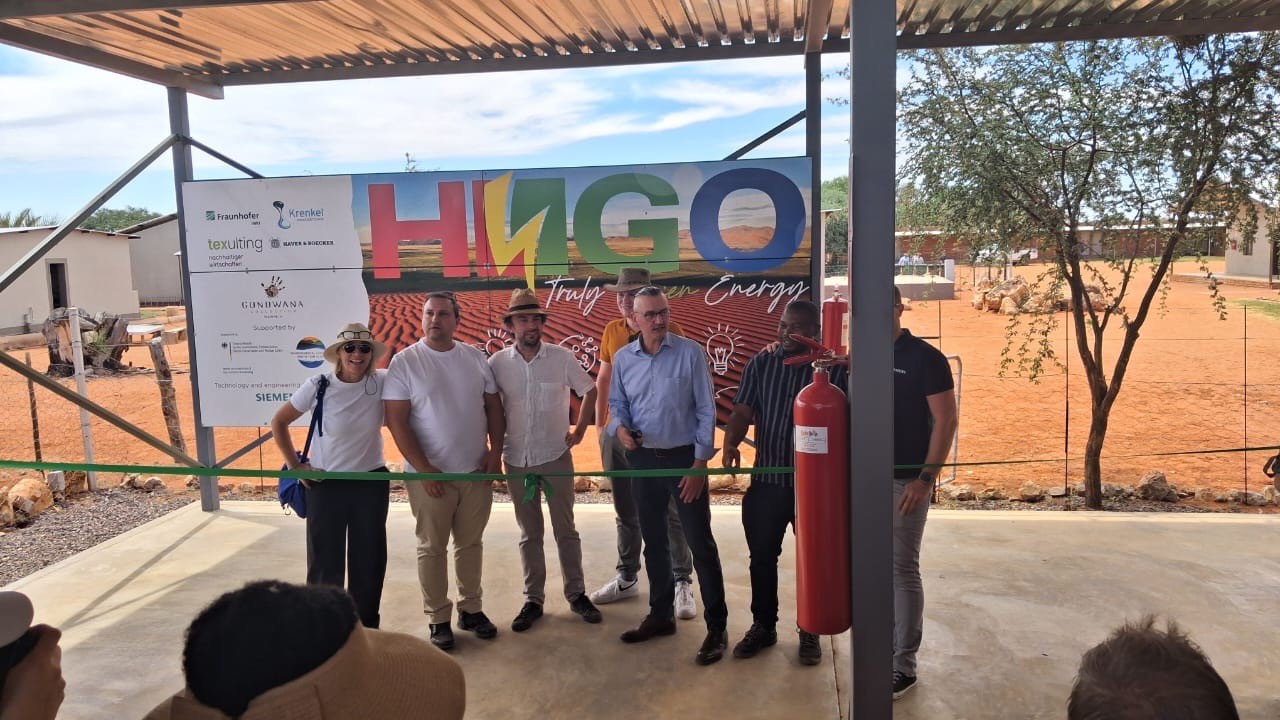
The HygO Project, hosted by Gondwana Collection Namibia, represents an innovative approach to environmental sustainability through the integration of containerised wastewater treatment and green hydrogen production currently being piloted at Kalahari Anib Lodge.
The initiative demonstrates how emerging technologies can transform waste streams into valuable resources while creating opportunities for improved environmental performance and operational efficiency. The project offers a practical illustration of how environmental management, scientific research and business innovation can converge to address resource constraints. In a country such as Namibia, where water scarcity, energy security and sustainable economic development remain critical priorities, integrated technological solutions of this nature have significant relevance.
“This project is environmental management in practice and aligns closely with the objectives of our MBA Natural Resource Management specialisation. It demonstrates what can be achieved when organisations, environmental practitioners and scientists collaborate to develop innovative solutions to real-world resource and sustainability challenges,” said Dr Johannes.
The MBA Natural Resource Management specialisation at Namibia Business School equips professionals with a multidisciplinary understanding of natural resource economics, environmental governance, resource efficiency and sustainable management practices. Initiatives such as HygO provide valuable real-world examples of how these principles can be translated into practical technologies and commercially relevant sustainability solutions.
An important emerging lesson is that the economics of sustainable technologies depend not only on technological innovation, but also on intelligent systems integration and a deep understanding of operational requirements.
In the broader field of decentralised energy and green microgrids, combining modular, software-driven technologies with accurate energy-demand profiles can help minimise unnecessary system oversizing, improve resource utilisation and reduce deployment costs. These principles highlight the importance of designing sustainability solutions around actual operating conditions rather than technological capacity alone.
For Namibia, such initiatives provide an important foundation for advancing circular economy practices, developing local technological capabilities and strengthening the relationship between scientific innovation, sustainable tourism and industrial development.
The future of sustainable development lies not simply in adopting green technologies, but in understanding how to integrate them intelligently, economically and responsibly into the systems in which businesses and communities operate.
You can read more about the Natural Resource Management Specialization here: https://www.nbs.edu.na/master-of-business-administration-nqf-level-9-natural-resources-management/
 Saim Gottlieb – General Assistant
 Christine Kaengurova – General Assistant